The State of Music Usage on Social Media in 2026
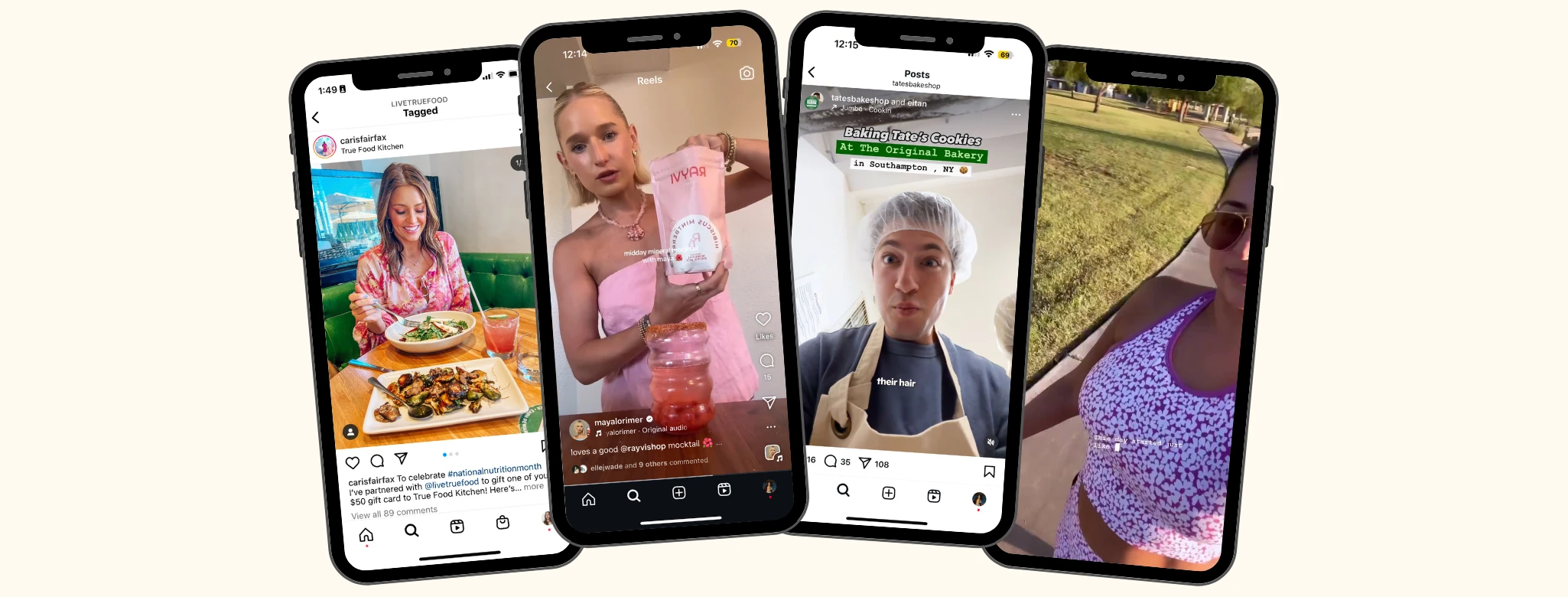
Something fundamental has shifted in how music reaches people. Radio, television, and streaming playlists still matter — but the place where most people now discover, share, and experience music is social media. Not a platform designed for music. Platforms designed for people — which turned out to be the same thing.
In 2026, the relationship between music and social media is deeper, more commercial, and more legally complex than it's ever been. Billions of pieces of content containing music are published every day. Brands are spending more on music-driven social campaigns than at any point in history. And the enforcement infrastructure that rights holders have built to protect their catalogs has never been more sophisticated.
This is what the landscape looks like right now.
Social media is now the primary music discovery channel
The shift has been underway for years, but the numbers have now become definitive. Social media — led by TikTok, Instagram, and YouTube Shorts — is where the majority of music discovery happens for audiences under 35, and increasingly for audiences of all ages.
Tracks that go viral on TikTok routinely chart on Billboard. Artists with no label backing and no radio presence build audiences of millions through Reels and Shorts. Legacy catalog gets rediscovered when a track appears in a trending meme format or creator challenge.
This has fundamentally changed what music means commercially. A track's performance on social media is now a leading indicator of its commercial value — for sync licensing, brand partnerships, live performance demand, and streaming numbers. The social media layer has become the most important signal in music.
The volume is extraordinary — and growing
The sheer volume of music-containing content published to social platforms each day is difficult to comprehend at human scale.
TikTok alone processes hundreds of millions of video uploads per month, the vast majority of which contain music. Instagram Reels, YouTube Shorts, Facebook video, and X are adding hundreds of millions more. And every piece of that content represents a music usage event — a potential licensing moment, a royalty claim, an identification challenge.
This volume is not static. Short-form video continues to grow as the dominant content format across every major platform. As more creators enter the ecosystem and posting frequency increases, the volume of music usage on social media is on track to dwarf anything that came before it.
For rights holders, this scale represents both an opportunity and a challenge. The opportunity: an unprecedented amount of value is being generated from their catalogs. The challenge: tracking, claiming, and monetizing that value at scale requires technology that most rights holders haven't fully deployed.
Brands are investing more — and taking on more risk
Brand investment in social media music has accelerated dramatically. Several converging trends are driving this.
Influencer marketing has matured into a primary channel. What was once an experimental budget line is now a core component of most brand marketing strategies. And music is inseparable from influencer content — it drives engagement, sets tone, and makes content feel native to the platform.
Branded sounds and audio identity are becoming mainstream. Major brands are investing in custom sonic identities for social media, commissioning original tracks for campaigns, and building brand recall through music in the same way they've used visual identity for decades.
Platform advertising increasingly incorporates music. TikTok's advertising formats are built around sound. Instagram Reels ads perform significantly better with music. Music has become table stakes for effective social media advertising.
All of this investment comes with exposure. Commercial use of music in branded social content requires proper licensing — and the gap between the music brands are using and the licenses they actually hold has never been wider. Most brands don't have systems to audit their music usage, and most assume platform music libraries cover their commercial content when they don't.
The result is a growing liability sitting inside most brand marketing programs, largely invisible to the teams running them.
Rights enforcement has caught up with usage
For years, the volume of social media music usage outpaced the ability of rights holders to detect and act on it. That gap has closed significantly.
Automated content identification now scans major platforms continuously. The technology has become fast enough, accurate enough, and comprehensive enough that rights holders who invest in monitoring can achieve meaningful visibility across TikTok, Instagram, YouTube, Facebook, and more simultaneously.
Rights enforcement has followed. Takedown notices, licensing demands, and in some cases litigation are increasing. Brands are increasingly the target — not because they're the worst offenders, but because commercial use is the easiest to prove and the most valuable to monetize. A brand running a campaign with unlicensed music is a clear-cut case: commercial use, demonstrable value, identifiable party.
The enforcement curve is still rising. Rights holders who haven't yet built out their monitoring capabilities are doing so now, which means the volume of enforcement actions in 2026 and beyond will continue to increase.
The modified audio problem has gotten harder
As identification technology has improved, so have the ways music gets modified online — sometimes intentionally to avoid detection, more often simply because it's how social media culture works.
Sped-up versions of tracks have become a dominant audio format, particularly on TikTok. Pitch-shifted audio is common. Tracks get layered with other sounds, chopped into clips, remixed into mashups, and used in ways that bear only a partial resemblance to the original recording.
AI has added a new dimension to this. AI-generated music that imitates specific artists' styles is proliferating. Voice cloning is being used to create fake performances of real artists. AI tools can remix, transpose, and transform existing recordings in ways that create genuine identification challenges.
For rights holders, this means that identification technology needs to do more than match exact recordings. It needs to handle the full range of modifications that content actually undergoes on social media — and it needs to handle them at scale and in real time.
The composition layer is still under monitored
Most discussion of music rights on social media focuses on recordings — the specific master recordings that show up in content. But a significant and underappreciated layer of usage involves compositions: the underlying songs that get covered, performed, interpolated, and reimagined.
Every time a creator records a cover of a song and posts it on TikTok, the composition is being used — even if the original recording isn't. Every time a songwriter's melody gets interpolated into an original track, the composition right is triggered. Every time an AI generates music that draws heavily on a specific musical style or composition, the question of composition rights arises.
This layer is under monitored because identifying compositions is technically harder than identifying recordings. It requires melodic analysis rather than simple audio fingerprinting. And it's where a significant amount of undetected, uncollected usage lives — particularly for publishers and songwriters.
The emerging platform question
TikTok, Instagram, YouTube, and Facebook are the dominant players today. But the social media landscape continues to evolve, and music follows wherever audiences go.
Threads has grown rapidly since its launch and is developing its own content culture, including music. LinkedIn's video content has expanded significantly and now includes a meaningful volume of branded content with music. Newer platforms and formats continue to emerge.
Each new platform represents a new monitoring challenge. Rights holders who build identification capabilities on current platforms need to think about how those capabilities will extend to wherever audiences migrate next. And brands entering new platforms for their campaigns need to think about whether their music licensing extends to new distribution channels.
What this means for brands
If you're running social media marketing with any music in it, 2026 is the year to get your house in order. The enforcement environment has changed. The technology detecting unlicensed use has improved. And the cost of getting caught — in legal exposure, takedown disruption, and platform penalties — has increased.
The brands that are ahead of this are the ones who have built music identification into their content workflow, set clear guidelines for creators and agency partners, and conducted audits of what's already live across their accounts.
The brands that are behind it are discovering the cost the hard way.
What this means for rights holders
If your catalog is any good, it's on social media. The question is whether you can see it. Most rights holders are capturing a fraction of the value their catalogs are generating on social platforms — not because the value isn't there, but because the visibility isn't.
Building that visibility is increasingly a strategic priority rather than a nice-to-have. The rights holders who can see where their music is being used — in real time, across all platforms, including modified audio and composition-level usage — are in a fundamentally different position than those who can't. They're collecting more revenue, enforcing more effectively, and making better decisions about their catalogs.
The infrastructure to achieve that visibility exists. Using it is a choice.
Get in touch to see how Trakr gives brands and rights holders the visibility they need in the current landscape.